English
English
Español
Português
русский
français
日本語
Deutsch
Tiếng Việt
Italiano
Nederlands
ไทย
Polski
한국어
Svenska
magyar
Malay
বাংলা
Dansk
Suomi
हिन्दी
Pilipino
Türk
Gaeilge
عربى
Indonesia
norsk
اردو
čeština
Ελληνικά
Українська
Javanese
فارسی
தமிழ்
తెలుగు
नेपाली
Burmese
български
ລາວ
Latine
Қазақ
Euskal
Azərbaycan
slovenský
Македонски
Lietuvos
Eesti Keel
Română
Slovenski
मराठी
Српски
Esperanto
Afrikaans
Català
עִברִית
Cymraeg
Galego
Latvietis
icelandic
יידיש
Беларус
Hrvatski
Kreyòl ayisyen
Shqiptar
Malti
lugha ya Kiswahili
አማርኛ
Bosanski
Frysk
ជនជាតិខ្មែរ
ქართული
ગુજરાતી
Hausa
Кыргыз тили
ಕನ್ನಡ
Corsa
Kurdî
മലയാളം
Maori
Монгол хэл
Hmong
IsiXhosa
Zulu
Punjabi
پښتو
Chichewa
Samoa
Sesotho
සිංහල
Gàidhlig
Cebuano
Somali
Точик
O'zbek
Hawaiian
سنڌي
Shinra
հայերեն
Igbo
Sundanese
Lëtzebuergesch
Malagasy
Yoruba
Javanese
Banbala
Pokjoper
Divih
Philippine
Gwadani
Elokano

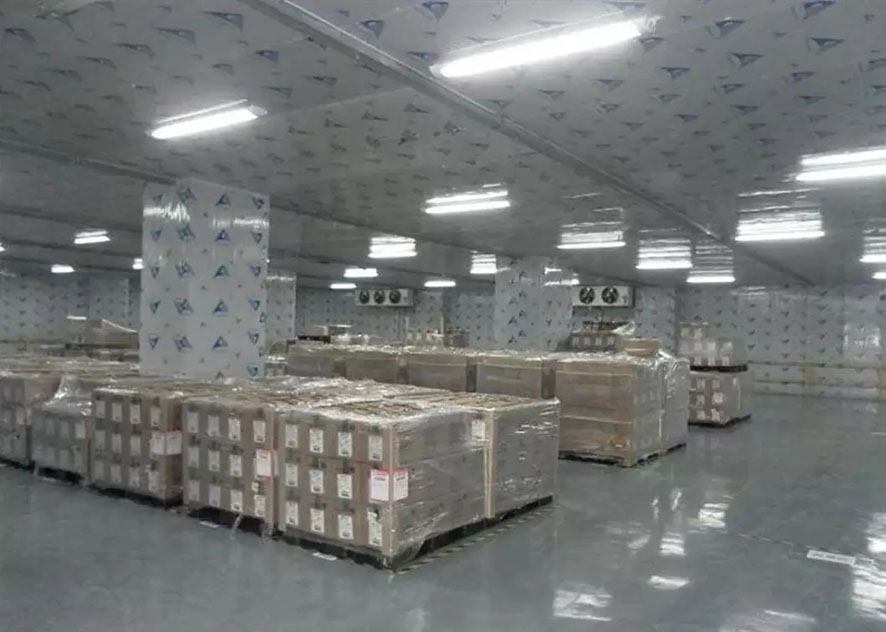
Pharmaceutical cold storage is the "repository of life" that safeguards vital health supplies such as vaccines, blood products, insulin, and biologics. Its core requirement goes far beyond simple low-temperature storage; it is the ultimate pursuit of temperature stability. Any slight deviation in temperature may mean the loss of drug potency or even the breeding of safety risks.

However, the smooth operation of this "bank of life" heavily relies on its auxiliary systems, particularly the absolute reliability of its drainage and fire-fighting systems. In these seemingly marginal but actually fatal aspects, electric heat tracing technology is providing precise, reliable, and uninterrupted warmth, building an invisible safety barrier for pharmaceutical cold storage to resist freezing risks and ensure core temperature remains undisturbed.
The primary goal of safeguarding the electric heat tracing system is to ensure the absolute smoothness of the drainage system, which is the lifeline of the core function of the cold storage. During the operation of the cold storage, the evaporator will continuously produce defrosting water. This water must be quickly discharged outside the cold storage through the preset drainage pipes. Once the drainage pipe freezes at the wall-penetrating section or the part exposed to low temperature environment, the consequences will be disastrous: the defrosting water cannot be discharged and will accumulate and freeze inside the cold storage or under the evaporator coil. The ice layer will block the evaporator fins, resulting in a sharp decline in refrigeration efficiency and loss of control over the cold storage temperature; the accumulated water may even overflow, polluting the drug packaging and storage environment. To address this risk, self-regulating electric heat tracing bands are laid along the key paths of the drainage pipes, and effective insulation is applied, forming an active defense system. Its intelligence lies in its ability to automatically adjust the heating power according to the pipe temperature: when the drainage pipe is at low water temperature or in a cold environment, the heat tracing band increases its output to maintain the pipe wall temperature above freezing point; when there is no water flow or the ambient temperature rises, it automatically reduces the power. This ensures that the defrosting water can be smoothly discharged in liquid form at any time, fundamentally eliminating ice blockage and water damage, and clearing the biggest obstacle for the efficient and stable operation of the refrigeration system.
The dimension of protection extends from the drainage system to the uncompromisable bottom line of fire safety. According to regulations, pharmaceutical cold storage facilities are typically required to install fire sprinkler or fire hose systems. These pipelines are filled with static clean water, which, once frozen at low temperatures, can completely paralyze the entire fire protection system at critical moments. The ice expansion effect may also directly rupture the pipelines, causing secondary water damage. To simply "shut off" or drain the fire hoses means voluntarily giving up fire safety, which is unacceptable under any standards. The only compliant and reliable solution is to equip these fire hoses with a dedicated anti-freezing electric heat tracing system. This system is designed with a safety level higher than ordinary anti-freezing requirements, using products with higher protection levels, and equipped with uninterruptible power supply or dual-circuit power supply to ensure that heat tracing protection continues in any emergency situation where the municipal power is interrupted. It not only protects the pipelines themselves, but also serves as the last physical line of defense for the cold storage facility in the extremely unlikely but highly risky scenario of a fire, making the safety plan truly effective at any temperature.
The deeper level of protective intelligence is reflected in the intelligent integration of the electric heat tracing system with the overall monitoring system of the cold storage. In modern pharmaceutical cold chain management, centralized monitoring of temperature and equipment is a mandatory requirement. Advanced electric heat tracing systems are no longer isolated "heaters"; their operational status can be integrated into the building automation or temperature control system of the cold storage. Operation and maintenance personnel can view the operational status (current, temperature, power consumption) and health status (insulation resistance warning) of each section of drainage pipe heat tracing and each section of fire hose heat tracing in real time on the central monitoring screen. The system can set intelligent strategies: for example, activating the drainage pipe heat tracing in advance before the defrosting cycle begins to ensure optimal drainage conditions, or automatically strengthening the heat tracing protection of relevant pipelines upon receiving a signal from the fire protection system. At the same time, by analyzing the energy consumption data of the heat tracing circuit, predictive judgments can be made on whether the insulation layer is damaged or the heat tracing belt is aging, thus achieving preventive maintenance. This data-driven, visualized management makes the protection of "edge systems" as precise, proactive, and traceable as monitoring core temperature.
Therefore, ensuring the safety of pharmaceutical cold storage with electric heat tracing bands is a systematic project that encompasses functional assurance, regulatory compliance, and intelligent management. In pharmaceutical cold storage, which holds the hope for life, it is precisely these electric heat tracing bands, wrapped around pipes and continuously emitting gentle heat, that, with their absolute reliability, form a sturdy "thermal defense line". This ensures the safe and stable operation of the cold environment, silently safeguarding the quality and efficacy of every medicine throughout its entire lifecycle, from storage to retrieval.