English
English
Español
Português
русский
français
日本語
Deutsch
Tiếng Việt
Italiano
Nederlands
ไทย
Polski
한국어
Svenska
magyar
Malay
বাংলা
Dansk
Suomi
हिन्दी
Pilipino
Türk
Gaeilge
عربى
Indonesia
norsk
اردو
čeština
Ελληνικά
Українська
Javanese
فارسی
தமிழ்
తెలుగు
नेपाली
Burmese
български
ລາວ
Latine
Қазақ
Euskal
Azərbaycan
slovenský
Македонски
Lietuvos
Eesti Keel
Română
Slovenski
मराठी
Српски
Esperanto
Afrikaans
Català
עִברִית
Cymraeg
Galego
Latvietis
icelandic
יידיש
Беларус
Hrvatski
Kreyòl ayisyen
Shqiptar
Malti
lugha ya Kiswahili
አማርኛ
Bosanski
Frysk
ជនជាតិខ្មែរ
ქართული
ગુજરાતી
Hausa
Кыргыз тили
ಕನ್ನಡ
Corsa
Kurdî
മലയാളം
Maori
Монгол хэл
Hmong
IsiXhosa
Zulu
Punjabi
پښتو
Chichewa
Samoa
Sesotho
සිංහල
Gàidhlig
Cebuano
Somali
Точик
O'zbek
Hawaiian
سنڌي
Shinra
հայերեն
Igbo
Sundanese
Lëtzebuergesch
Malagasy
Yoruba
Javanese
Banbala
Pokjoper
Divih
Philippine
Gwadani
Elokano

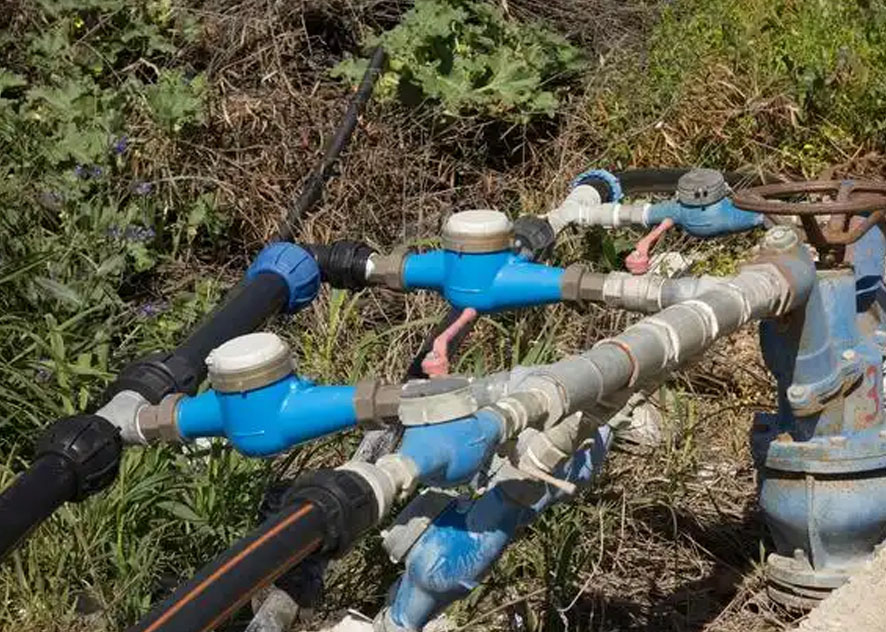
In the modern large-scale and precision agricultural production system, the delivery of pesticides has bid farewell to traditional manual handling and mixing, evolving into an efficient and continuous operation relying on pipeline networks. On this "lifeline" that stretches from the pesticide dispensing center directly to the roots and leaves of crops, the stability of temperature directly determines the success or failure of crop protection operations.

The introduction of electric heat tracing technology goes far beyond preventing pipeline freezing. It is more profoundly related to the exertion of pesticide efficacy, the guarantee of operational safety, and the leap in the modernization level of agricultural production. It is an indispensable technological footnote in modern precision agriculture.
The fundamental and core significance of electric heat tracing bands in pesticide delivery pipelines lies in their role in ensuring the continuity and timeliness of crop protection operations. The prevention and control of field pests and diseases have strict "window periods", and once missed, the losses may be irreversible. However, many pesticide formulations, especially suspension concentrates, emulsifiable concentrates, and high-concentration mother liquors, are extremely sensitive to ambient temperature. When the temperature falls below their crystallization point or pour point, the viscosity of the liquid increases sharply, fluidity is lost, and it is extremely easy to form blockages in pipelines, valves, and filters. Such blockages not only lead to complete system failure but also require time-consuming and laborious clearance work, which may directly delay the optimal application timing. By laying electric heat tracing bands on the pipeline system and combining them with insulation, the temperature of the liquid can be actively and precisely maintained within a safe flow range. This ensures the unimpeded flow of pesticides from storage tanks to spray nozzles, enabling large farms or crop protection service teams to efficiently and continuously complete hundreds or even thousands of acres of operational tasks according to a strict plan, minimizing the interference of weather changes on production plans and safeguarding the critical rhythm of agricultural production.
The deeper significance lies in its defense of the efficacy and precise application of pesticide products. Pesticides are precise chemical preparations, and the stability of their active ingredients, the compatibility of the adjuvant system, and the physical properties of the final liquid are all closely related to temperature. Unsuitable low temperatures may lead to the precipitation of active ingredients, emulsion breakage and stratification of the preparation, which not only results in uneven spray concentration, affecting the control effect, but may also cause phytotoxicity due to locally high concentrations. The stable and suitable pipeline environment provided by the electric heat tracing system is like a dynamic "incubator", which minimizes the physicochemical changes of the liquid during transportation. This enables pesticides to be delivered to the spray nozzle in their designed optimal state, ensuring that their biological activity is fully released and also guaranteeing the uniformity of the liquid required by advanced technologies such as variable rate spraying and precise application. In this sense, electric heat tracing not only safeguards the physical smoothness of the pipeline, but also ensures the value realization of the "technological content" of pesticides.
Lastly, its application carries significant safety and environmental responsibilities, adding technological weight to sustainable agriculture. The bursting of pesticide delivery pipelines due to freezing at low temperatures or leakage caused by abnormal increase in pump pressure due to increased viscosity pose major safety and environmental risks. Once high-concentration liquid pesticides leak into soil or water bodies, it will cause severe point source pollution. The electric heat tracing system fundamentally eliminates the risk of pipeline damage caused by changes in physical state through active temperature management. At the same time, stable temperature is also conducive to more thorough cleaning of the pipeline system after use, reducing cross-contamination and residue between different pesticides. For modern agricultural enterprises, this system can also integrate monitoring functions to grasp the pipeline temperature status in real time, achieve predictive maintenance, and elevate safety management from post-remedial actions to pre-emptive prevention. This is not only an upgrade in production management but also a substantial measure for enterprises to fulfill their environmental responsibilities and achieve green production.
Therefore, the significance of using electric heat tracing bands for pesticide delivery pipelines lies in its multidimensional empowerment, integrating engineering reliability, chemical precision, and environmental safety. It frees crop protection operations from the constraints of natural temperature, ensuring the scientific value of pesticides is transmitted intact in the field. Moreover, it lays a solid foundation for safety and environmental protection while pursuing efficiency in large-scale agricultural production.