English
English
Español
Português
русский
français
日本語
Deutsch
Tiếng Việt
Italiano
Nederlands
ไทย
Polski
한국어
Svenska
magyar
Malay
বাংলা
Dansk
Suomi
हिन्दी
Pilipino
Türk
Gaeilge
عربى
Indonesia
norsk
اردو
čeština
Ελληνικά
Українська
Javanese
فارسی
தமிழ்
తెలుగు
नेपाली
Burmese
български
ລາວ
Latine
Қазақ
Euskal
Azərbaycan
slovenský
Македонски
Lietuvos
Eesti Keel
Română
Slovenski
मराठी
Српски
Esperanto
Afrikaans
Català
עִברִית
Cymraeg
Galego
Latvietis
icelandic
יידיש
Беларус
Hrvatski
Kreyòl ayisyen
Shqiptar
Malti
lugha ya Kiswahili
አማርኛ
Bosanski
Frysk
ជនជាតិខ្មែរ
ქართული
ગુજરાતી
Hausa
Кыргыз тили
ಕನ್ನಡ
Corsa
Kurdî
മലയാളം
Maori
Монгол хэл
Hmong
IsiXhosa
Zulu
Punjabi
پښتو
Chichewa
Samoa
Sesotho
සිංහල
Gàidhlig
Cebuano
Somali
Точик
O'zbek
Hawaiian
سنڌي
Shinra
հայերեն
Igbo
Sundanese
Lëtzebuergesch
Malagasy
Yoruba
Javanese
Banbala
Pokjoper
Divih
Philippine
Gwadani
Elokano

Winter construction faces the challenges of low temperatures and severe cold, leading to frequent quality issues such as slow concrete strength growth, frozen and cracked pipelines, and poor paint curing. Traditional curing measures are inefficient and their effects are unstable. The electric heat tracing system, with its advantages of precise temperature control and flexible adaptation, provides an efficient solution for winter construction and curing, addressing the challenges posed by low temperatures.

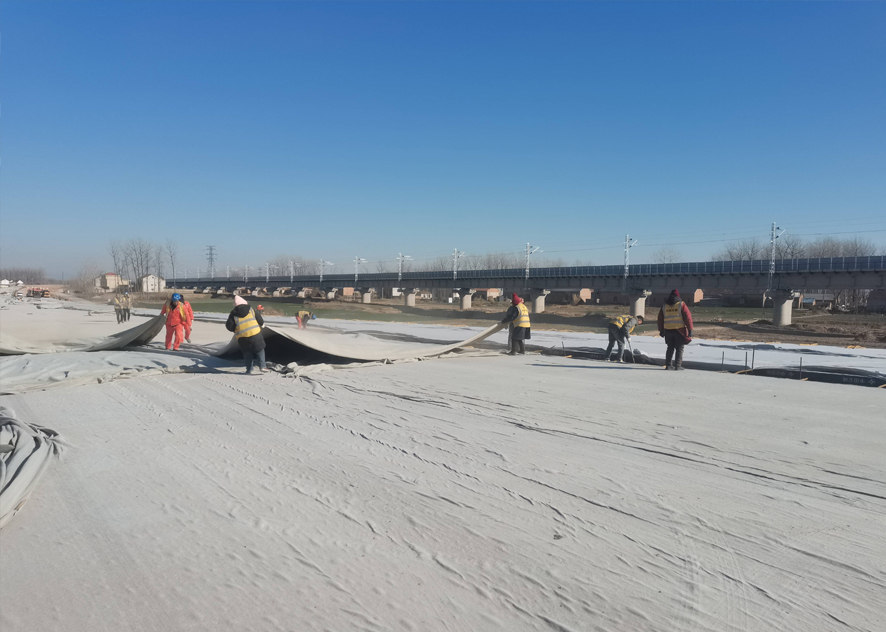
Concrete curing is the core application scenario of electric heat tracing bands. After concrete pouring for bridges, tunnels, etc., the heat tracing band is laid flat on the inside of the formwork or wrapped around the steel reinforcement framework, forming a closed curing space with insulation blankets. A suitable temperature of 5-15°C is set to promote the cement hydration reaction. Compared to traditional steam curing, electric heat tracing can shorten the time for concrete strength to reach the standard by 40%, avoiding problems such as cracks and insufficient strength caused by low temperatures.
Double protection is required for pipeline engineering construction in winter. After laying the water supply and drainage pipelines, spiral wrap them with 20-30W/m heat tracing bands, with densified treatment at elbows and joints. The outer layer is wrapped with an insulation layer and a waterproof protective shell to ensure that the pipeline will not freeze and block at -20℃. During the installation of heating pipelines, the heat tracing bands are laid simultaneously with the pipelines, and the pipelines are preheated in advance to avoid cracking at joints due to temperature differences, ensuring stable operation after the system is put into use.
Electric heat tracing is also indispensable for the maintenance of building decoration and construction. During the application of exterior wall paint, heat tracing belts and hot air curtains are installed on the outside of scaffolding to maintain the construction environment temperature above 10°C, preventing the paint from becoming brittle and falling off due to freezing. After the construction of the indoor floor leveling layer, heat tracing belts are laid to maintain the ground temperature, avoiding sanding and hollowing caused by low temperatures, and improving the quality of decoration.
The storage of outdoor equipment and materials requires precise temperature control. For storage tanks of paint, adhesives, and other materials used in construction, anti-corrosion tracing bands are wrapped around them and a constant temperature of 5-10℃ is set to prevent materials from solidifying and deteriorating. For the engine water tanks and oil pipelines of construction machinery, tracing bands are installed for preheating in winter to avoid engine oil solidifying, which could prevent equipment from starting and ensure the construction progress.
Winter construction heat tracing needs to be adapted to the specific scene characteristics. For outdoor operations, IP67 waterproof and weather-resistant heat tracing belts are selected, paired with an intelligent temperature control system for remote monitoring. For concrete curing, priority is given to self-regulating heat tracing belts with good flexibility to avoid damaging the structure. In flammable and explosive paint storage scenarios, explosion-proof heat tracing belts and accessories must be used to eliminate potential safety hazards.
During installation, the heat tracing system must be deployed in synchronization with the construction progress, and pre-commissioning is required to ensure precise temperature control. After construction is completed, the heat tracing parameters should be gradually adjusted according to the maintenance cycle until they meet the quality standards. The electric heat tracing system does not require complex equipment, is easy to install, and has controllable energy consumption, significantly reducing the cost of construction and maintenance in winter.
The electric heat tracing system, with precise temperature control at its core, comprehensively addresses the quality pain points of winter construction and maintenance, from concrete curing to pipeline protection, and from material storage to equipment support. Its flexibility in adapting to various construction scenarios not only enhances maintenance efficiency but also ensures project quality, making it an indispensable "quality guardian" for winter construction.