English
English
Español
Português
русский
français
日本語
Deutsch
Tiếng Việt
Italiano
Nederlands
ไทย
Polski
한국어
Svenska
magyar
Malay
বাংলা
Dansk
Suomi
हिन्दी
Pilipino
Türk
Gaeilge
عربى
Indonesia
norsk
اردو
čeština
Ελληνικά
Українська
Javanese
فارسی
தமிழ்
తెలుగు
नेपाली
Burmese
български
ລາວ
Latine
Қазақ
Euskal
Azərbaycan
slovenský
Македонски
Lietuvos
Eesti Keel
Română
Slovenski
मराठी
Српски
Esperanto
Afrikaans
Català
עִברִית
Cymraeg
Galego
Latvietis
icelandic
יידיש
Беларус
Hrvatski
Kreyòl ayisyen
Shqiptar
Malti
lugha ya Kiswahili
አማርኛ
Bosanski
Frysk
ជនជាតិខ្មែរ
ქართული
ગુજરાતી
Hausa
Кыргыз тили
ಕನ್ನಡ
Corsa
Kurdî
മലയാളം
Maori
Монгол хэл
Hmong
IsiXhosa
Zulu
Punjabi
پښتو
Chichewa
Samoa
Sesotho
සිංහල
Gàidhlig
Cebuano
Somali
Точик
O'zbek
Hawaiian
سنڌي
Shinra
հայերեն
Igbo
Sundanese
Lëtzebuergesch
Malagasy
Yoruba
Javanese
Banbala
Pokjoper
Divih
Philippine
Gwadani
Elokano

Large‑scale oil‑gas transmission, chemical raw‑material delivery and remote industrial pipeline projects around the world face prominent heat‑tracing limitations from ordinary parallel‑resistance heating cables. Parallel heat‑tracing products have strict limits on single‑loop operating length and require frequent intermediate power feeding points, raising overall engineering cost and multiplying potential failure risks from numerous field cable joints.
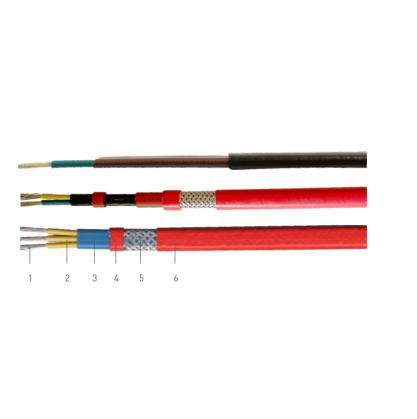
HGC‑1 and HGC‑3 series‑connected constant‑power heating cables adopt resistive core conductors as heating elements. Electric current passes through the resistive core wire to generate uniform Joule heat, maintaining stable constant watt‑per‑meter output across the whole cable span without power drop at far‑end sections of long‑distance loops. One single power feeding point can support maximum circuit length reaching 3600 meters, greatly cutting the quantity of power distribution cabinets and intermediate connection accessories for long‑haul pipeline projects.
The cable adopts multi‑layer composite construction: heating conductor, heating‑element insulation layer, inner insulating sheath, metallic braided shielding layer and outer protective jacket. An optional fluoroplastic sleeve can be fitted outside the metal braid, offering extra defense against chemical corrosion and underground burial abrasion for harsh field operating environments. A cold‑end connection process is recommended for power terminals to extend overall cable service life during site installation.
A wide selection of rated voltage specifications covers 220V, 380V, 660V, 1100V, 3300V and 6600V, matching diversified power grid standards of global industrial sites. It achieves maximum maintained temperature of 100℃, maximum withstand exposure temperature of 205℃ and minimum installation temperature of ‑50℃. The product is qualified for installation in Zone I, Zone II and Division 2 explosive hazardous locations, fitting general industrial and explosion‑classified working conditions for petrochemical, energy and process industry projects worldwide.