English
English
Español
Português
русский
français
日本語
Deutsch
Tiếng Việt
Italiano
Nederlands
ไทย
Polski
한국어
Svenska
magyar
Malay
বাংলা
Dansk
Suomi
हिन्दी
Pilipino
Türk
Gaeilge
عربى
Indonesia
norsk
اردو
čeština
Ελληνικά
Українська
Javanese
فارسی
தமிழ்
తెలుగు
नेपाली
Burmese
български
ລາວ
Latine
Қазақ
Euskal
Azərbaycan
slovenský
Македонски
Lietuvos
Eesti Keel
Română
Slovenski
मराठी
Српски
Esperanto
Afrikaans
Català
עִברִית
Cymraeg
Galego
Latvietis
icelandic
יידיש
Беларус
Hrvatski
Kreyòl ayisyen
Shqiptar
Malti
lugha ya Kiswahili
አማርኛ
Bosanski
Frysk
ជនជាតិខ្មែរ
ქართული
ગુજરાતી
Hausa
Кыргыз тили
ಕನ್ನಡ
Corsa
Kurdî
മലയാളം
Maori
Монгол хэл
Hmong
IsiXhosa
Zulu
Punjabi
پښتو
Chichewa
Samoa
Sesotho
සිංහල
Gàidhlig
Cebuano
Somali
Точик
O'zbek
Hawaiian
سنڌي
Shinra
հայերեն
Igbo
Sundanese
Lëtzebuergesch
Malagasy
Yoruba
Javanese
Banbala
Pokjoper
Divih
Philippine
Gwadani
Elokano

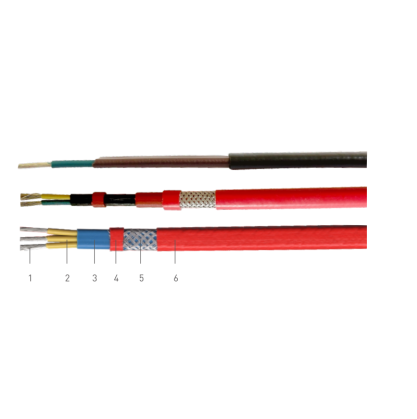
Global process industries keep searching for reliable thermal management hardware for cross‑region pipeline freeze protection and process temperature hold‑up, where parallel‑type heat‑tracing solutions hit hard limits on total circuit length. The HGC‑1 and HGC‑3 series constant‑power heating cables adopt resistive core conductors as heating elements. As electric current passes through resistive core wires, consistent Joule heat is generated across the full cable run, securing stable power output per linear meter without terminal‑end power attenuation on multi‑kilometer loops.
The multi‑layered cable structure includes heating element, heating‑element insulation, inner protective sheath, metallic braided shielding layer and outer insulating jacket. An optional fluoroplastic sleeve fitted over the metal braid provides supplementary protection when cables are buried underground or exposed to corrosive chemical media, extending service life under aggressive site conditions. Rated voltage options cover 220V, 380V, 660V, 1100V, 3300V and 6600V to match diverse global industrial power grid specifications. The product reaches a maximum maintained temperature of 100℃, maximum withstand temperature of 205℃, and permits installation at ambient temperatures as low as ‑50℃. It is qualified for both general‑purpose deployments and explosive hazardous Zone 1, Zone 2 working areas. Professional cold‑end termination procedures are recommended for field installation: installers crimp resistive heating cores with cold‑transition conductors via copper connectors, apply wrapping tape, reserve braid shielding for earthing, and implement multi‑layer heat‑shrink sleeve sealing to boost long‑term operational reliability.