English
English
Español
Português
русский
français
日本語
Deutsch
Tiếng Việt
Italiano
Nederlands
ไทย
Polski
한국어
Svenska
magyar
Malay
বাংলা
Dansk
Suomi
हिन्दी
Pilipino
Türk
Gaeilge
عربى
Indonesia
norsk
اردو
čeština
Ελληνικά
Українська
Javanese
فارسی
தமிழ்
తెలుగు
नेपाली
Burmese
български
ລາວ
Latine
Қазақ
Euskal
Azərbaycan
slovenský
Македонски
Lietuvos
Eesti Keel
Română
Slovenski
मराठी
Српски
Esperanto
Afrikaans
Català
עִברִית
Cymraeg
Galego
Latvietis
icelandic
יידיש
Беларус
Hrvatski
Kreyòl ayisyen
Shqiptar
Malti
lugha ya Kiswahili
አማርኛ
Bosanski
Frysk
ជនជាតិខ្មែរ
ქართული
ગુજરાતી
Hausa
Кыргыз тили
ಕನ್ನಡ
Corsa
Kurdî
മലയാളം
Maori
Монгол хэл
Hmong
IsiXhosa
Zulu
Punjabi
پښتو
Chichewa
Samoa
Sesotho
සිංහල
Gàidhlig
Cebuano
Somali
Точик
O'zbek
Hawaiian
سنڌي
Shinra
հայերեն
Igbo
Sundanese
Lëtzebuergesch
Malagasy
Yoruba
Javanese
Banbala
Pokjoper
Divih
Philippine
Gwadani
Elokano

Remote‑location industrial infrastructure, from arctic‑region transmission pipelines to underground chemical‑plant pipe networks, creates overlapping technical challenges: ultra‑long circuit requirements, sub‑zero installation conditions, chemical corrosion risks and explosion‑safety demands. Traditional heat‑tracing hardware often cannot satisfy all these requirements simultaneously.
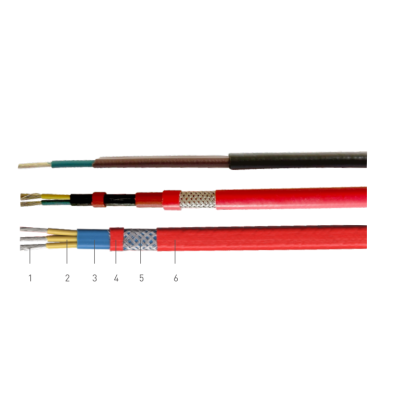
HGC‑1 and HGC‑3 series constant‑power heating cables are purpose‑built for such complex operating profiles. The series heating principle removes the circuit‑length bottleneck of parallel‑resistance heat‑tracing, allowing single‑power‑source loops as long as 3600 meters. Operators no longer need frequent intermediate power tap‑offs along lengthy pipeline corridors, cutting overall system complexity and installation capital expenditure. The layered mechanical construction balances insulation performance, shielding integrity and chemical resistance. The optional fluoroplastic outer covering shields metal braid layers against underground soil corrosion and contact with aggressive process fluids, a critical upgrade for buried or chemical‑exposed routing layouts.
Broad voltage compatibility allows adaptation to regional high‑voltage industrial power supplies worldwide. The cable system maintains stable performance under extreme thermal envelopes: maximum withstand temperature hits 205℃, while minimum installation temperature drops to ‑50℃, suiting frigid outdoor construction environments. Compliance with Zone 1 and Zone 2 hazardous‑location standards supports deployment within flammable‑vapor‑present petrochemical facilities. Standardized cold‑end connection workflows give field contractors repeatable termination practices to reduce on‑site installation errors and improve system longevity.