English
English
Español
Português
русский
français
日本語
Deutsch
Tiếng Việt
Italiano
Nederlands
ไทย
Polski
한국어
Svenska
magyar
Malay
বাংলা
Dansk
Suomi
हिन्दी
Pilipino
Türk
Gaeilge
عربى
Indonesia
norsk
اردو
čeština
Ελληνικά
Українська
Javanese
فارسی
தமிழ்
తెలుగు
नेपाली
Burmese
български
ລາວ
Latine
Қазақ
Euskal
Azərbaycan
slovenský
Македонски
Lietuvos
Eesti Keel
Română
Slovenski
मराठी
Српски
Esperanto
Afrikaans
Català
עִברִית
Cymraeg
Galego
Latvietis
icelandic
יידיש
Беларус
Hrvatski
Kreyòl ayisyen
Shqiptar
Malti
lugha ya Kiswahili
አማርኛ
Bosanski
Frysk
ជនជាតិខ្មែរ
ქართული
ગુજરાતી
Hausa
Кыргыз тили
ಕನ್ನಡ
Corsa
Kurdî
മലയാളം
Maori
Монгол хэл
Hmong
IsiXhosa
Zulu
Punjabi
پښتو
Chichewa
Samoa
Sesotho
සිංහල
Gàidhlig
Cebuano
Somali
Точик
O'zbek
Hawaiian
سنڌي
Shinra
հայերեն
Igbo
Sundanese
Lëtzebuergesch
Malagasy
Yoruba
Javanese
Banbala
Pokjoper
Divih
Philippine
Gwadani
Elokano

Air conditioning drain pipes are prone to blockage due to frozen condensate water in winter, leading to water backflow and equipment malfunctions, especially in outdoor low-temperature environments where the potential hazards are prominent. Traditional antifreeze methods have limited effectiveness. Electric heat tracing bands, with their advantages of precise temperature control, flexible installation, and strong adaptability, can specifically address the issue of pipe blockage, establishing a solid defense line for the operation of drain pipes in winter.

Accurately select and adapt to the characteristics of air conditioning drain pipes. Most air conditioning drain pipes are made of PVC material and have a relatively thin diameter (commonly 16-25mm). It is preferred to use self-regulating electric heat tracing bands with a power control range of 15-25W/m, which can independently adjust the power to maintain a pipe temperature of 5-10℃, preventing condensed water from freezing and avoiding damage to the pipe from high temperatures. For outdoor and humid scenarios, choose waterproof models with a rating of IP67 or higher, and use a corrosion-resistant and wear-resistant material for the sheath to resist rain and snow erosion and environmental aging.
Scientific laying achieves uniform heat tracing throughout the entire area. The straight pipe section is laid in parallel, with the heat tracing belt tightly attached to the outer wall of the drainage pipe. Pressure-sensitive adhesive tape is used to fix it every 25-30cm to ensure no voids or gaps, thereby enhancing heat conduction efficiency. For parts prone to freezing such as drainage pipe bends, joints, and outdoor pipe orifices, spiral winding and densified laying are adopted, with the spacing shortened to 10-15cm, specifically strengthening the heat tracing effect. During laying, a 5%-8% length redundancy is reserved to accommodate thermal expansion and contraction, avoiding damage to the heat tracing belt due to stretching.
The accompanying protective measures enhance anti-freezing and safety performance. Waterproof junction boxes are selected for wiring connections. After the core is securely connected, it is wrapped with insulating tape and coated with sealant. A rain cover is added outdoors to prevent moisture from entering and causing short circuits. The outer side of the heat tracing belt is wrapped with 30-40mm thick flame-retardant insulation cotton, and the seams are sealed with aluminum foil tape. The outer layer is wrapped with waterproof protective cloth, which not only reduces heat loss but also resists external environmental erosion. No complex temperature control system is required; a simple temperature controller can assist in regulation, reducing installation and usage costs.
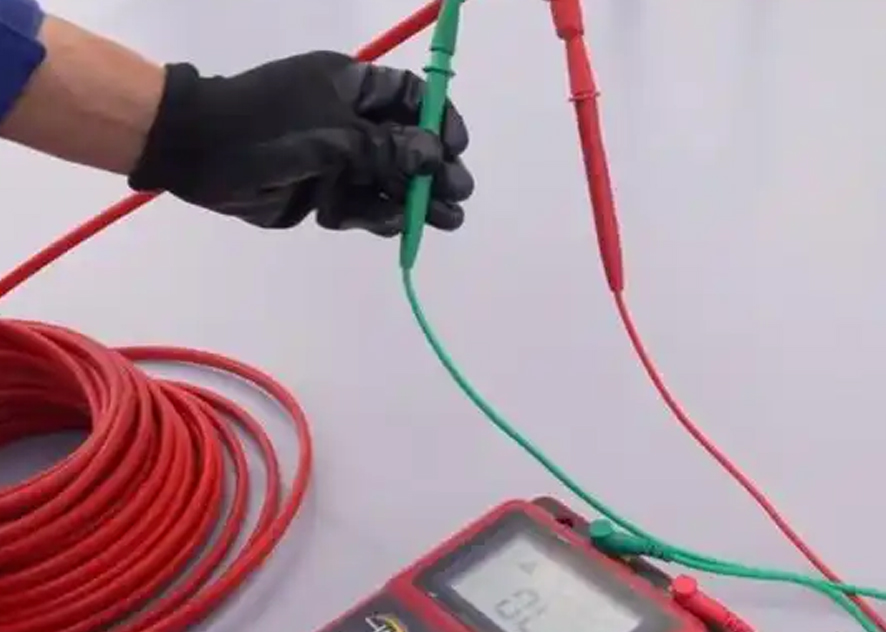
Adhere to installation and operation and maintenance specifications to mitigate risks. Before construction, clear debris from the surface of the drainage pipe to prevent scratching of the outer sheath of the heat tracing system by sharp objects. During laying, avoid the weld joints of the pipeline to ensure the original drainage function is not compromised. Conduct routine monthly inspections on the integrity and fixation of the heat tracing system's sheath, and measure insulation resistance (≥20MΩ) quarterly. Perform a comprehensive inspection before the arrival of cold waves, and promptly replace aging components. If the insulation layer is damaged, repair it immediately to prevent heat loss, which could lead to ice formation and blockage of the pipeline.
Optimization plan for special scenarios. For outdoor suspended drainage pipes, protective sleeves can be installed on the outside of the heat tracing belt to withstand wind forces and collision damage. When multiple drainage pipes are laid in parallel, heat tracing belts should be installed separately and controlled independently to avoid mutual interference. Crossing and overlapping of heat tracing belts is prohibited to prevent local overheating. Self-regulating temperature models can be moderately fitted, but multiple layers are strictly prohibited.
The dedicated solution for electric heat tracing bands precisely meets the antifreeze requirements of air conditioning drainage pipes. Through comprehensive process control encompassing model selection, installation, protection, and operation and maintenance, it effectively prevents condensed water from freezing and blocking the pipes, ensuring stable operation of air conditioning in winter. It balances practicality and economy, adapting to various air conditioning scenarios