English
English
Español
Português
русский
français
日本語
Deutsch
Tiếng Việt
Italiano
Nederlands
ไทย
Polski
한국어
Svenska
magyar
Malay
বাংলা
Dansk
Suomi
हिन्दी
Pilipino
Türk
Gaeilge
عربى
Indonesia
norsk
اردو
čeština
Ελληνικά
Українська
Javanese
فارسی
தமிழ்
తెలుగు
नेपाली
Burmese
български
ລາວ
Latine
Қазақ
Euskal
Azərbaycan
slovenský
Македонски
Lietuvos
Eesti Keel
Română
Slovenski
मराठी
Српски
Esperanto
Afrikaans
Català
עִברִית
Cymraeg
Galego
Latvietis
icelandic
יידיש
Беларус
Hrvatski
Kreyòl ayisyen
Shqiptar
Malti
lugha ya Kiswahili
አማርኛ
Bosanski
Frysk
ជនជាតិខ្មែរ
ქართული
ગુજરાતી
Hausa
Кыргыз тили
ಕನ್ನಡ
Corsa
Kurdî
മലയാളം
Maori
Монгол хэл
Hmong
IsiXhosa
Zulu
Punjabi
پښتو
Chichewa
Samoa
Sesotho
සිංහල
Gàidhlig
Cebuano
Somali
Точик
O'zbek
Hawaiian
سنڌي
Shinra
հայերեն
Igbo
Sundanese
Lëtzebuergesch
Malagasy
Yoruba
Javanese
Banbala
Pokjoper
Divih
Philippine
Gwadani
Elokano

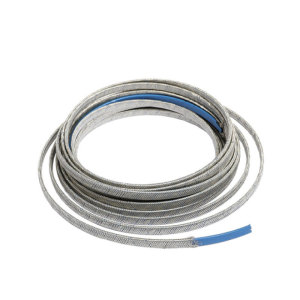
Ordinary polymer‑jacketed heating cables face upper‑temperature limits and suffer accelerated aging under combined high‑heat plus corrosive‑vapor conditions. MI mineral‑insulated heating cable adopts inorganic magnesium‑oxide insulation compactly encapsulated inside seamless metal outer sheath. This special structure enables continuous operation under far higher temperature compared with self‑regulating and regular constant‑power cables, while offering superior compression‑resistance, vibration‑resistance and chemical‑corrosion‑resistant capability. MI cables serve high‑temperature instrument tubing tracing, high‑temperature flue‑gas sampling composite pipelines, and thermal‑maintenance for high‑temperature reaction‑associated piping inside refineries and ethylene plants. The metal sheath provides reliable grounding path, enhancing electrical‑safety performance for deployment in explosive zones. MI heating elements can be integrated into pre‑fabricated composite sampling tube assemblies for high‑temperature flue‑gas sample‑gas transport. Although MI‑series products demand stricter termination‑process control at installation stage, their outstanding durability reduces long‑term replacement frequency. For global high‑end process industry projects facing ultra‑high‑temperature working‑conditions, MI mineral‑insulated heat‑tracing technology acts as an irreplaceable core thermal‑management solution.