English
English
Español
Português
русский
français
日本語
Deutsch
Tiếng Việt
Italiano
Nederlands
ไทย
Polski
한국어
Svenska
magyar
Malay
বাংলা
Dansk
Suomi
हिन्दी
Pilipino
Türk
Gaeilge
عربى
Indonesia
norsk
اردو
čeština
Ελληνικά
Українська
Javanese
فارسی
தமிழ்
తెలుగు
नेपाली
Burmese
български
ລາວ
Latine
Қазақ
Euskal
Azərbaycan
slovenský
Македонски
Lietuvos
Eesti Keel
Română
Slovenski
मराठी
Српски
Esperanto
Afrikaans
Català
עִברִית
Cymraeg
Galego
Latvietis
icelandic
יידיש
Беларус
Hrvatski
Kreyòl ayisyen
Shqiptar
Malti
lugha ya Kiswahili
አማርኛ
Bosanski
Frysk
ជនជាតិខ្មែរ
ქართული
ગુજરાતી
Hausa
Кыргыз тили
ಕನ್ನಡ
Corsa
Kurdî
മലയാളം
Maori
Монгол хэл
Hmong
IsiXhosa
Zulu
Punjabi
پښتو
Chichewa
Samoa
Sesotho
සිංහල
Gàidhlig
Cebuano
Somali
Точик
O'zbek
Hawaiian
سنڌي
Shinra
հայերեն
Igbo
Sundanese
Lëtzebuergesch
Malagasy
Yoruba
Javanese
Banbala
Pokjoper
Divih
Philippine
Gwadani
Elokano

The effectiveness and lifespan of electric heat tracing depend entirely on the on-site installation process. The same product, with standardized construction, can operate stably for many years. If installed haphazardly, it is prone to uneven heating, tripping, local overheating, and other hidden changes. Mastering the standard installation process and key details is the key to ensuring the stable operation of pipeline antifreeze and process temperature maintenance systems.

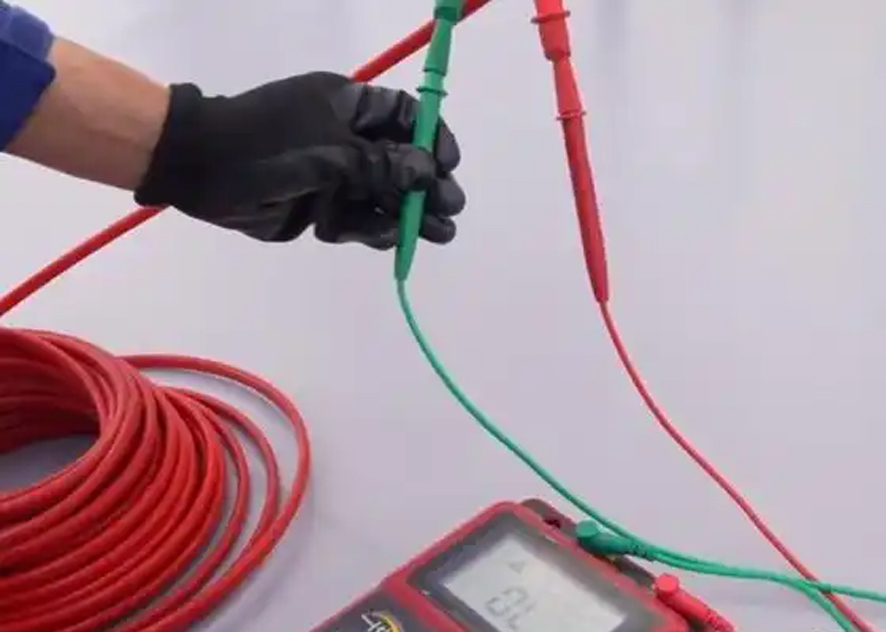
Pre construction preparation is particularly important. Before construction, it is necessary to check the site conditions and confirm whether the pipeline diameter, usage environment, and power of the heat tracing belt model match. Check the appearance of the cable for cracks or damage, retest the insulation resistance, and ensure that the product is in good condition. At the same time, clean the rust, burrs, and oil stains on the pipe wall to avoid scratching the cable sheath with sharp parts and burying potential faults.
Cable laying is the core process of installation. The conventional straight pipe section is laid flat and fixed with pressure-sensitive tape at intervals to ensure that the cable is flat and adheres to the pipe wall without hanging, twisting, or knotting. It is strictly prohibited to lay cables in a cross overlapping manner to prevent local heat accumulation and overheating, accelerate sheath aging, and affect the overall service life of the equipment.
For the dead corners of pipeline heat dissipation, encrypted laying treatment is required. Elbows, valves, flanges, pipe supports, and other areas have fast heat dissipation and are prone to freezing and blockage. During construction, it is possible to increase the length of local cables appropriately, intensify heat supplementation to offset heat loss, effectively eliminate anti freezing blind spots, and make the heating temperature of the entire pipeline more uniform.
The laying length must comply with product specifications. The self limiting heat tracing belt has a maximum installation length for a single circuit, and excessive installation is likely to result in power attenuation and insufficient heating at the end. Long distance pipelines need to be reasonably segmented and independently powered, with balanced circuit loads to ensure stable heating in each section of the heating belt.
The installation of accessory wiring must comply with the specifications. Accessories such as the front and rear ends, junction boxes, and terminals must be matched with products of the same grade, and special explosion-proof sealing accessories must be used for explosion-proof conditions. Keep the wiring operation dry and clean, prevent water vapor and dust from entering the chamber, compact and seal the accessories, and avoid moisture, leakage, and water ingress faults in the later stage.
The installation of temperature control probes directly affects the accuracy of temperature control. The probe should be fixed tightly to the low-temperature side of the pipeline, avoiding the heat tracing belt body and direct sunlight areas to prevent temperature measurement data deviation. According to the on-site anti freezing or temperature maintenance requirements, set the start stop temperature reasonably to ensure the precise operation of the system automation.
Thermal insulation and external protection are the key closing steps. After the cable laying, wiring, and power on testing are normal, wrap the insulation layer to ensure that the splicing is tight and there are no holes or leaks. The outer waterproof and protective layer should be sealed and sealed to prevent rain, snow, and groundwater from seeping into the insulation layer, causing insulation failure and equipment moisture damage.
After the construction is completed, it is necessary to carry out debugging and acceptance. Retest insulation resistance and circuit current, and investigate issues such as leakage, short circuit, and overload. Power on trial operation, check the uniformity of heating and the sensitivity of temperature control start and stop. Only after passing the acceptance can it be put into normal use.
In summary, the installation of electric heat tracing belts focuses on detailed specifications and process standards. Strictly controlling the early investigation, laying and fixing, wiring protection, debugging and operation, can basically avoid most operational failures and ensure the long-term stability of the heat tracing system to achieve anti freezing and process temperature maintenance effects.