English
English
Español
Português
русский
français
日本語
Deutsch
Tiếng Việt
Italiano
Nederlands
ไทย
Polski
한국어
Svenska
magyar
Malay
বাংলা
Dansk
Suomi
हिन्दी
Pilipino
Türk
Gaeilge
عربى
Indonesia
norsk
اردو
čeština
Ελληνικά
Українська
Javanese
فارسی
தமிழ்
తెలుగు
नेपाली
Burmese
български
ລາວ
Latine
Қазақ
Euskal
Azərbaycan
slovenský
Македонски
Lietuvos
Eesti Keel
Română
Slovenski
मराठी
Српски
Esperanto
Afrikaans
Català
עִברִית
Cymraeg
Galego
Latvietis
icelandic
יידיש
Беларус
Hrvatski
Kreyòl ayisyen
Shqiptar
Malti
lugha ya Kiswahili
አማርኛ
Bosanski
Frysk
ជនជាតិខ្មែរ
ქართული
ગુજરાતી
Hausa
Кыргыз тили
ಕನ್ನಡ
Corsa
Kurdî
മലയാളം
Maori
Монгол хэл
Hmong
IsiXhosa
Zulu
Punjabi
پښتو
Chichewa
Samoa
Sesotho
සිංහල
Gàidhlig
Cebuano
Somali
Точик
O'zbek
Hawaiian
سنڌي
Shinra
հայերեն
Igbo
Sundanese
Lëtzebuergesch
Malagasy
Yoruba
Javanese
Banbala
Pokjoper
Divih
Philippine
Gwadani
Elokano

In chemical plants, oil refining units, or large energy stations, the layout of pipelines is far from textbook simplicity. They sometimes climb, sometimes twist, densely shuttling through the steel jungle, dotted with countless valves, flanges, pumps, instrument interfaces, and various pipe supports. This three-dimensional "steel maze" not only physically supports the process flow but also poses almost demanding challenges for heat tracing and insulation: how to efficiently and reliably deliver stable heat to every corner with different shapes and uneven heat dissipation, especially those "thermal islands" formed by elbows, tees, and valves?

In this intricate scenario, the true allure of electric heat tracing technology extends far beyond merely providing heat. Its inherent flexibility in application stands out. This adaptability encompasses a systematic capability to conform to any geometric shape, cater to diverse heat dissipation needs, and minimize installation complexities. This makes it an exceptional tool for tackling the complexities of pipeline heat tracing.
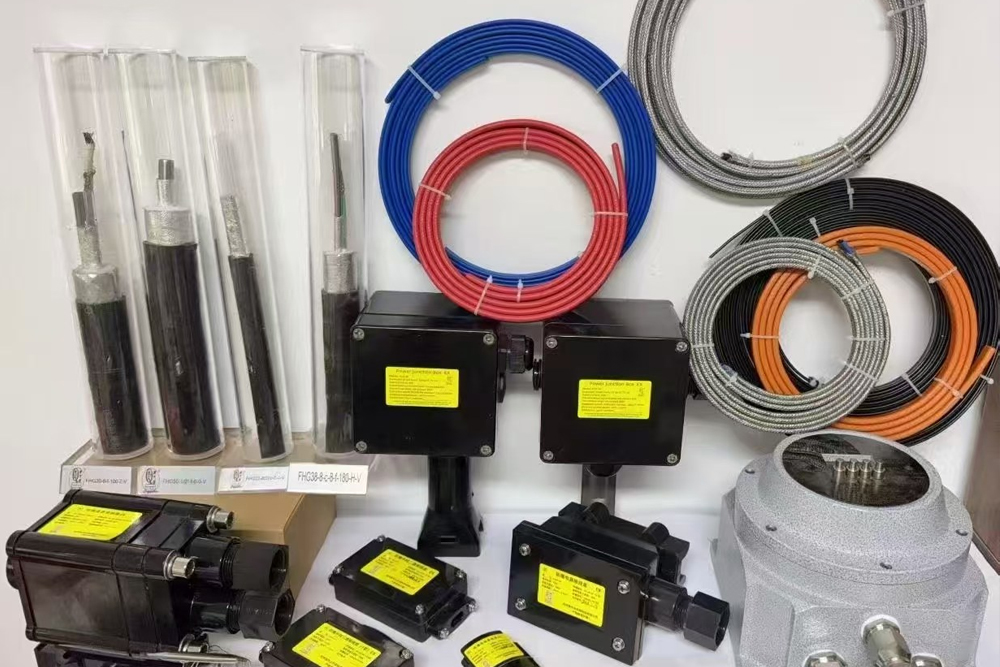
This flexibility primarily stems from the physical form and adaptive characteristics of the product itself. The most typical example is the flat, flexible self-regulating heating cable. It resembles a "heating rope" that can be bent as desired, closely fitting any curved surfaces and corners of the pipeline. In straight sections, it can be laid in parallel; at 90-degree bends, it can easily bypass smoothly; and at irregular protrusions such as valves or pump bodies, it allows for crossing and overlapping winding without causing local overheating due to overlap. More importantly, the "self-regulating" characteristic of its PTC material endows it with the ability to dynamically adjust output power. In areas where the pipeline dissipates heat quickly, it will automatically increase the heating capacity; in straight sections with good insulation, it will automatically reduce the output. This inherent intelligent response enables a single heating cable to adapt to the heat loss differences at different parts of the pipeline, eliminating the need to design complex control circuits for each "isolated island" individually. This fundamentally simplifies the complexity of system design and achieves the goal of addressing complex physical environments with simple physical means.
However, mere product flexibility is insufficient; true agility must be realized through diversified installation techniques and modular design. In practice, various flexible strategies have been developed: for dense bundles of short tubes and instrument clusters, the "tracking method" can be employed, where a tracing band is used to continuously heat multiple small tubes like drawing a stroke; for large valves, detachable tracing jackets can be pre-fabricated to facilitate rapid installation and maintenance; in areas where space is extremely limited and winding is not feasible, prefabricated "L" or "U" shaped tracing plates can be directly attached. More importantly, modern high-quality self-regulating tracing bands allow for safe cutting according to actual length requirements on site, which avoids material waste and enables installation to be tailored to the specific situation, rather than being forced to accommodate standard lengths. This combination of cutting freedom and diverse fixing methods endows construction workers with great on-site adaptability, enabling them to calmly handle any unexpected installation challenges.
The ultimate sublimation of this flexibility lies in its ability to support refined and zoned intelligent thermal management. The thermal demands of complex piping systems are not uniform. Different process pipelines, or even different sections of the same pipeline, may require different temperatures to be maintained, and their start-stop times may vary. The flexibility of the electric heat tracing system allows it to be easily divided into multiple independent temperature control loops. Coupled with distributed temperature sensors and intelligent controllers, the system can achieve independent and precise temperature control for different areas, and can be started and stopped in different time zones and zones according to production plans. This "breaking down the whole into parts and managing separately" fine control capability not only achieves precise energy deployment and maximizes energy conservation, but also enables the entire heat tracing system to "breathe" in sync with complex and changing process demands, becoming an intelligent and flexible organic component of the process flow.
Therefore, the flexibility of electric heat tracing bands for complex pipelines represents a comprehensive adaptation from material physics, construction techniques to control logic. It breaks down "complexity" into individual "local" problems that can be solved through simple, standard actions. This flexibility eliminates the need for engineers to design special heating jackets for each irregular valve, and it also removes the fear of construction workers facing the intricate web of pipe racks. Behind the cold steel and complex geometry, this heating element, which can bend freely, adjust intelligently, and control precisely, proves with its humble yet powerful adaptability that the most effective technical solution is often not the hardest, but the most flexible.